

Actor Portrayals



Actor Portrayals
Every Moment Matters: Do All You Can During Resection1
Because what’s left behind still needs to be treated.2
What Is GLIADEL® Wafer (carmustine implant)?


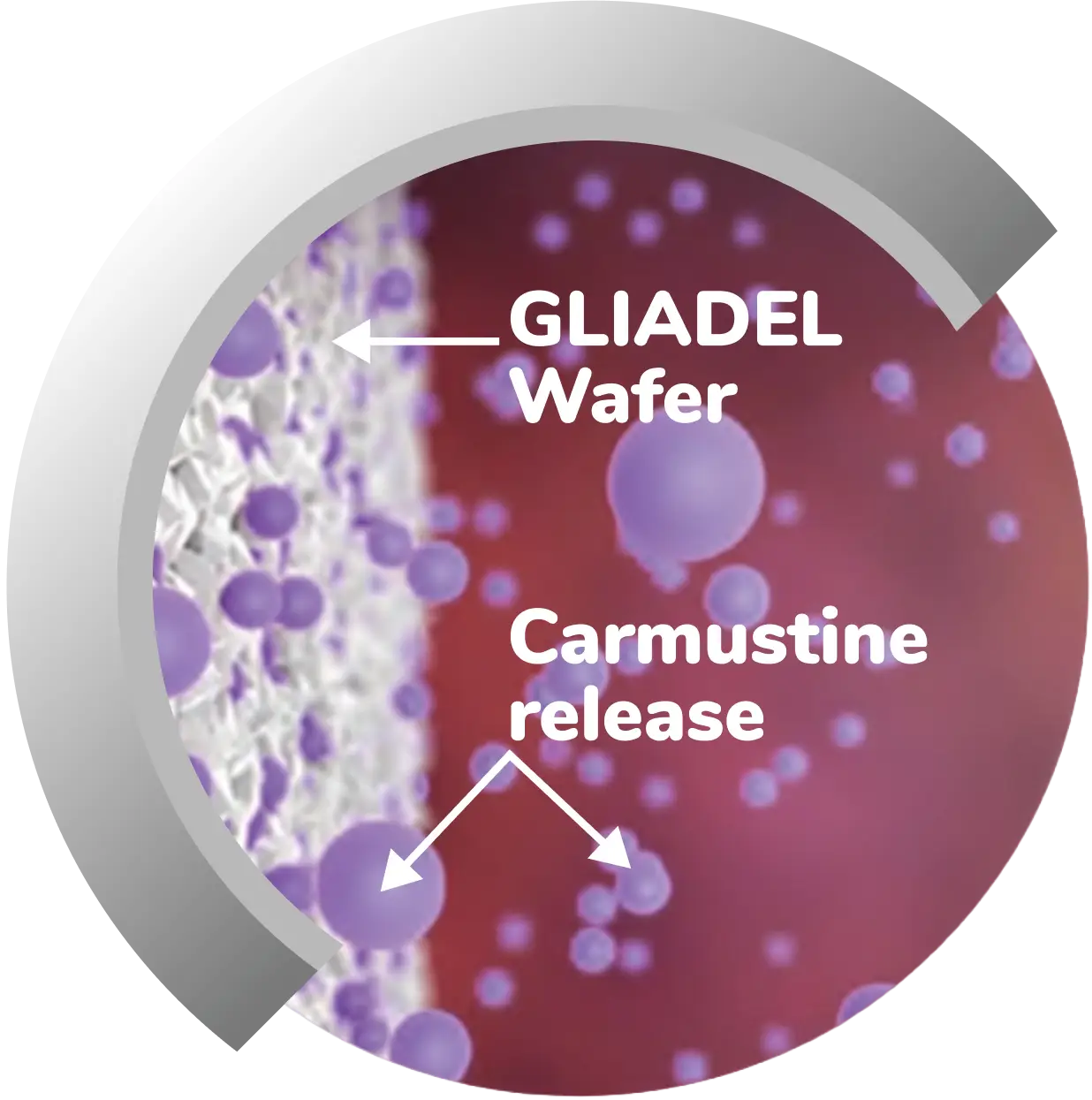
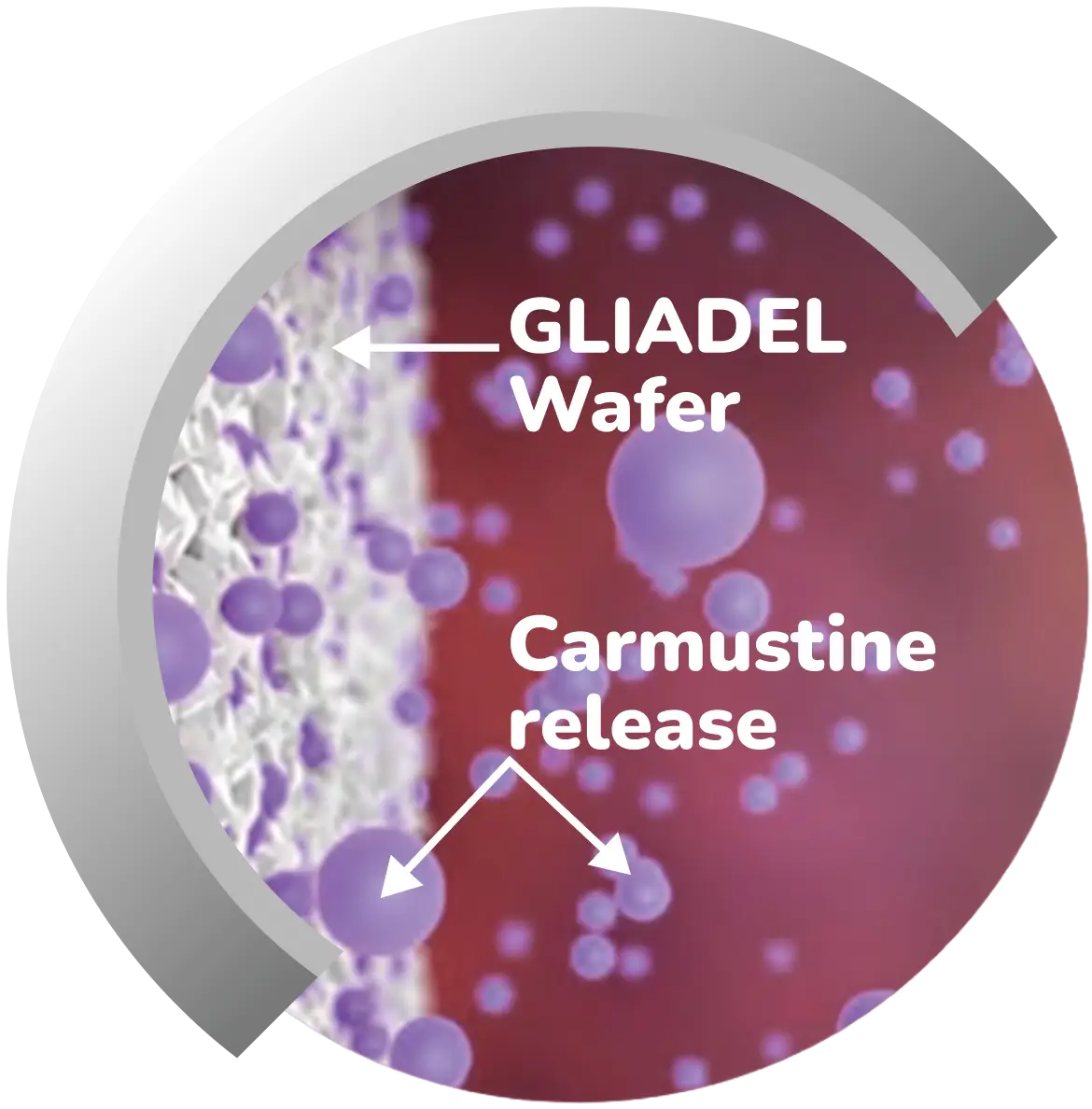
GLIADEL Wafer is an intracranial implant delivering carmustine via a biodegradable polifeprosan matrix at the tumor resection site.1
See MOA Video
Designed to biodegrade following implantation, with most (>70%) of the copolymer degrading within 3 weeks.1
See How GLIADEL Wafer Is Implanted
Delivers immediate carmustine release at the glioma resection site to target residual tumor cells.2,3
Discover How GLIADEL Wafer Works
A total dose of 61.6 mg of carmustine in a single-use box.1
Dedicated GLIADEL Wafer Ordering and LogisticsTreatment Guidelines Recommend Carmustine Implant (GLIADEL Wafer)4
NCCN Clinical Practice Guidelines in Oncology (NCCN Guidelines®) for the treatment of high-grade gliomas in adult patients include carmustine wafer implantation as a treatment option during maximal safe resection as an NCCN Category 2B recommendation.4
NCCN Guidelines® for the treatment of recurrent or progressive local gliomas in adult patients include carmustine wafer implantation as a treatment option during maximal safe resection as an NCCN Category 2B recommendation.4
NCCN makes no warranties of any kind whatsoever regarding their content, use or application and disclaims any responsibility for their application or use in any way.
Importance of Local, Immediate Chemotherapy Delivery: Extending Your Surgical Reach
Even after complete resection of an HGG, recurrence often occurs within centimeters of the original tumor site due to residual tumor cells.5,6
A 2- to 3-week gap typically occurs between tumor resection and subsequent chemo- or radiotherapy.7-9
Implanted in the resection cavity, GLIADEL Wafer delivers carmustine immediately to surrounding brain tissue for a localized antineoplastic effect.2,3
Intracranial implantation of carmustine circumvents the need to cross the blood-brain barrier and minimizes systemic exposure to carmustine.1
How Does GLIADEL Wafer Work?
It is recommended to implant 8 GLIADEL Wafers (total carmustine dose of 61.6 mg) in the resection cavity.1
GLIADEL Wafer releases localized carmustine, a DNA- and RNA-alkylating agent, directly into the brain tissue at the resection site for targeted antineoplastic activity.1,3
GLIADEL Wafer is implanted in a single procedure that coincides with surgical resection.1